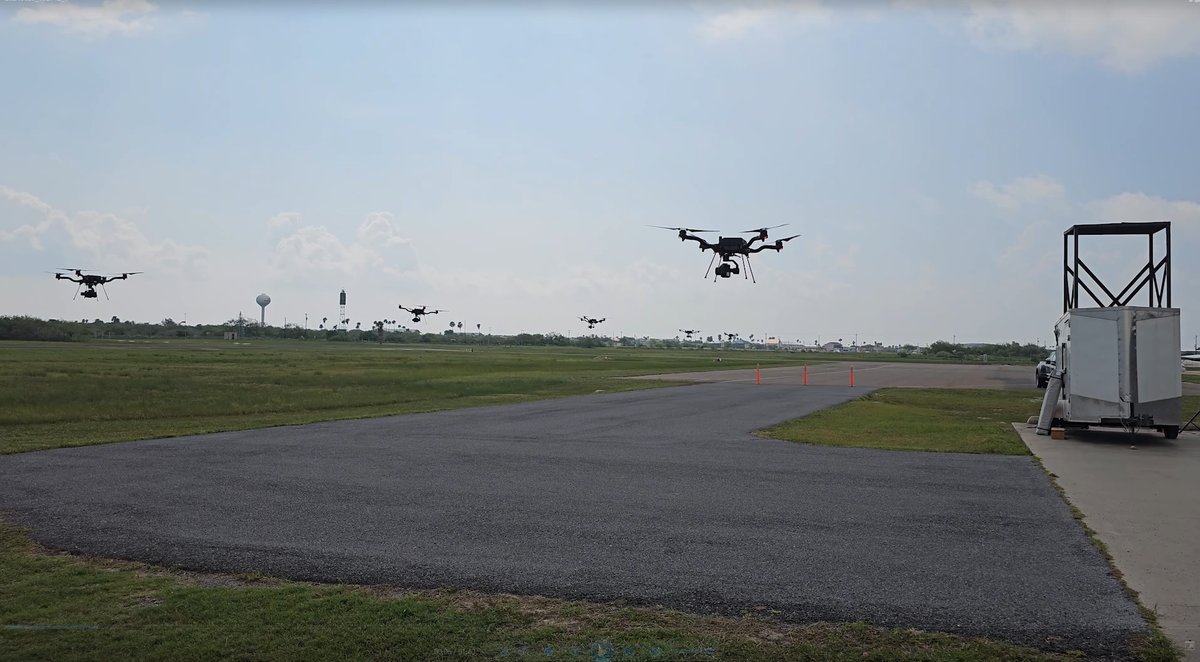
Tempest Droneworx™ has introduced the Corvus MRDR™ (Modular Robotics Development & Reporting), a platform designed to streamline the development and testing of autonomous drone systems. The announcement, made on August 18, 2026, addresses a critical bottleneck for developers: the significant time and expense required to conduct field tests. Traditionally, testing autonomous algorithms involves coordinating aircraft, crews, ranges, travel, weather, and hardware, which can be prohibitive for many organizations.
Corvus MRDR™ eliminates these barriers by enabling engineers to test their algorithms and control methods at scale in a simulated environment, then progressively transition to real drones without altering their existing workflow. This hybrid approach allows for seamless integration of virtual and physical testing, with the ability to replace simulated vehicles with real ones incrementally. The system leverages two key components: CROS (Common Runtime Operating System) and RAVN (Robotic Autonomous Vehicle Navigator), which work together to ensure that both simulated and real aircraft operate in real-world coordinates.
According to Tempest Droneworx™, the platform is platform-agnostic, meaning it can be used with a variety of drone hardware and software stacks. This flexibility is crucial for developers who need to test their proprietary algorithms without giving up ownership of their intellectual property. The ability to keep IP secure while scaling tests is a major advantage, as it allows companies to innovate faster and bring products to market more quickly.
The implications of Corvus MRDR™ are significant for the autonomous systems industry. By reducing the cost and complexity of testing, it lowers the barrier to entry for smaller companies and academic institutions, fostering greater innovation. Additionally, the platform supports safer development of autonomous systems, which can have positive impacts on public safety and quality of life. For example, drones used in emergency response, delivery, or infrastructure inspection can be developed and validated more efficiently, leading to quicker deployment of beneficial technologies.
Tempest Droneworx™, a Houston-based Service-Disabled Veteran-Owned Small Business (SDVOSB), serves a diverse customer base, including commercial, academic, public safety, government, and defense sectors. The company focuses on developing software that turns autonomous systems and sensor data into real-time operational insight. The introduction of Corvus MRDR™ aligns with this mission, providing a tool that enhances the capabilities of autonomous systems across various applications.
For more details on the announcement, including downloadable images and bios, visit the official page. The full press release is also available via Newsworthy.ai.