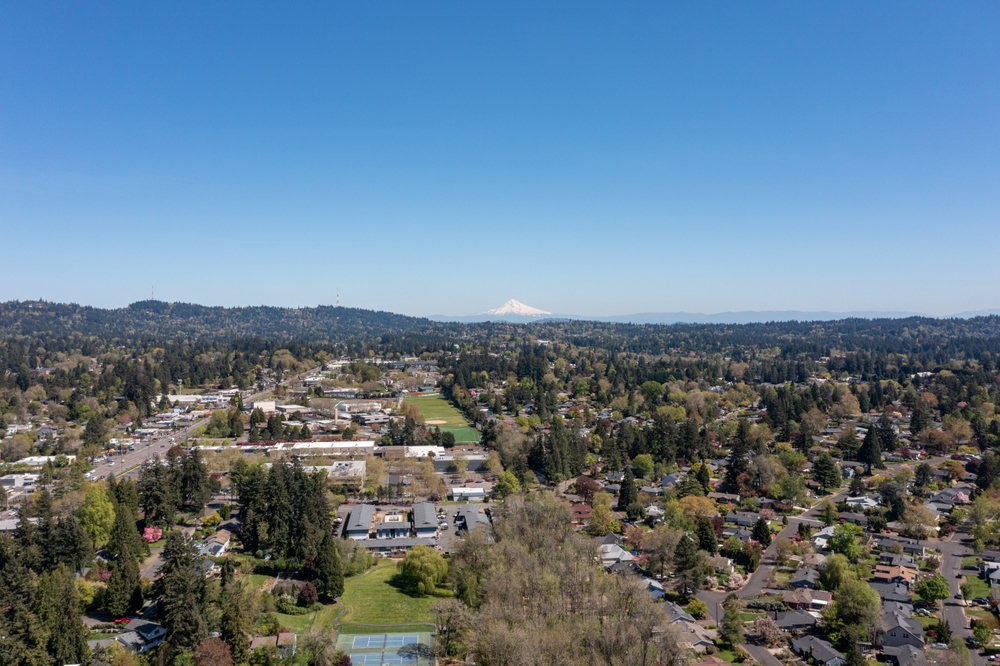
In Beaverton, Oregon, the conventional wisdom about Portland-area real estate focuses on interest rates and inventory, but a more localized trigger often determines whether buyers show up: the corporate fiscal calendar. When bonuses land and stock prices rise, showing activity picks up almost immediately, according to Carey Hughes, a Real Estate Professional with Carey Hughes Homes, who has worked Beaverton’s market for two decades. When layoffs loom, the market slows before a single listing hits the market.
Beaverton’s housing market currently sits at three to four months of inventory, up from sub-one-month levels during the pandemic. Multiple offers are rare. Homes that sell in the first week are priced at or slightly below market value; everything else lingers. Hughes describes it as “a tale of two markets.” Homes perceived as fair value move quickly because buyers are still active, but those with options aren’t willing to stretch financially for properties that need work or carry aspirational pricing. The average sale price in the area sits in the mid-$600,000 range, with established neighborhoods selling into the $700,000 and $800,000 range. Sellers face direct competition from new construction communities offering financing incentives, lower interest rates, closing cost credits, and upgrades – advantages that resale sellers can't match.
The connection between tech employment and Beaverton real estate is concrete. Hughes describes a pattern where fiscal year-end bonuses and stock option payouts used to generate visible waves of home-shopping activity. With Nike’s stock price down from its highs, employees who once used equity gains for larger down payments on move-up purchases have stayed put. “People have lost some of their nest egg,” Hughes said. “Right now, that’s just not happening. Everything’s on need-based.” The neighborhoods most sensitive to these cycles – Bethany, Forest Heights, Murrayhill, and Cooper Mountain – are the same ones that attract relocating tech workers. When hiring slows, the effect appears quickly.
One segment conspicuously absent is the move-up buyer – homeowners who purchased smaller homes and would normally trade up as families grow or incomes rise. Hughes attributes this directly to the rate lock-in effect: owners with low mortgage rates face a financial penalty for moving into a more expensive home at current rates, and prices haven’t fallen enough to offset that gap. This creates particular softness in the $750,000 to $1 million range, where move-up inventory sits without its natural buyer pool. For buyers who can absorb the higher rate, Hughes sees opportunity in that price band. She also pointed to condos, which have “really fallen out of favor” and now offer lower entry points for first-time buyers.
Looking ahead, Hughes sees the market’s trajectory as almost entirely rate-dependent. She pointed to a brief period in early 2026 when rates dipped into the low sixes and briefly below 6% – buyer activity picked up noticeably. “If interest rates get to 6%, high 5%, I think we could easily see an increase in volume sales of 10% or 20%,” she said. Price reductions have become routine. Hughes tracks the data by zip code and currently sees 40% to 50% of listings in some neighborhoods carrying at least one price reduction. Homes are currently selling roughly 5% below their 2020–2022 peaks, which Hughes characterized as overinflated during the pandemic. For buyers, Hughes emphasized that homeownership should be treated as a long-term investment. The next catalyst for Beaverton’s market may depend less on Federal Reserve policy than on whether Nike’s next earnings call gives its employees enough confidence to start shopping again.