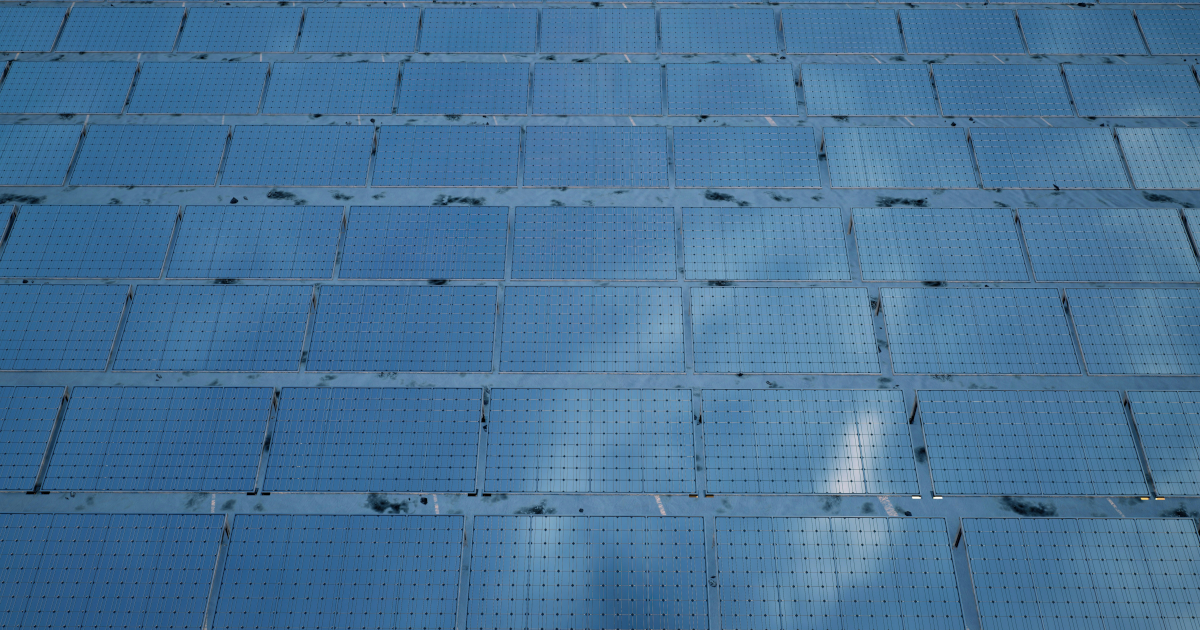
The rapid expansion of solar power across the United States is creating a land-use challenge with no simple answer. Solar requires far more land per unit of output than fossil fuel plants, making the question of where to site new capacity harder to avoid. That tension is showing up at scale as renewable buildout accelerates across the country. A coal plant can power a city from tens of acres; a solar farm generating equivalent output may need hundreds.
How those questions are answered will shape who gains from the transition and who carries the environmental and social costs. That is where firms like American Fusion Inc. (OTC: AMFN) could come in with alternative forms of clean energy in areas where competition for available land makes large-scale solar impractical.
According to industry experts, the land intensity of solar photovoltaic systems poses significant challenges for developers and policymakers. A typical utility-scale solar farm requires about 5 to 10 acres per megawatt, whereas a natural gas plant might use less than an acre for the same capacity. This discrepancy becomes critical as states and utilities aim to meet ambitious renewable portfolio standards and net-zero emissions targets.
The issue is particularly acute in densely populated regions where land is scarce and expensive. In the Northeast, for example, solar developers often face opposition from local communities concerned about the loss of farmland and natural habitats. Meanwhile, in the Southwest, where land is more abundant, transmission constraints and water availability for panel cleaning add complexity.
Alternative clean energy technologies, such as advanced nuclear fusion, could alleviate some of these pressures. American Fusion Inc., for instance, is developing compact fusion reactors that could provide baseload power without the extensive land footprint of solar or wind farms. While fusion remains in the experimental stage, its potential to generate large amounts of energy from a small site makes it an attractive long-term solution.
The land-use debate also intersects with environmental justice. Large-scale solar installations have been criticized for displacing communities and disrupting ecosystems. The Biden administration's goal of 100% carbon-free electricity by 2035 requires careful planning to ensure that renewable energy projects do not exacerbate existing inequalities.
As the renewable energy sector grows, innovative approaches to land use are emerging. Dual-use solar, which combines agriculture with solar panels, allows for crop production beneath elevated arrays. Brownfields and former mining sites are also being repurposed for solar development. However, these solutions may not be sufficient to meet the scale of demand.
In the interim, energy efficiency and demand-side management can reduce the amount of new generation needed. But ultimately, the transition to a clean energy economy will require a portfolio of technologies, including those that use land more efficiently, to achieve both climate goals and equitable outcomes.