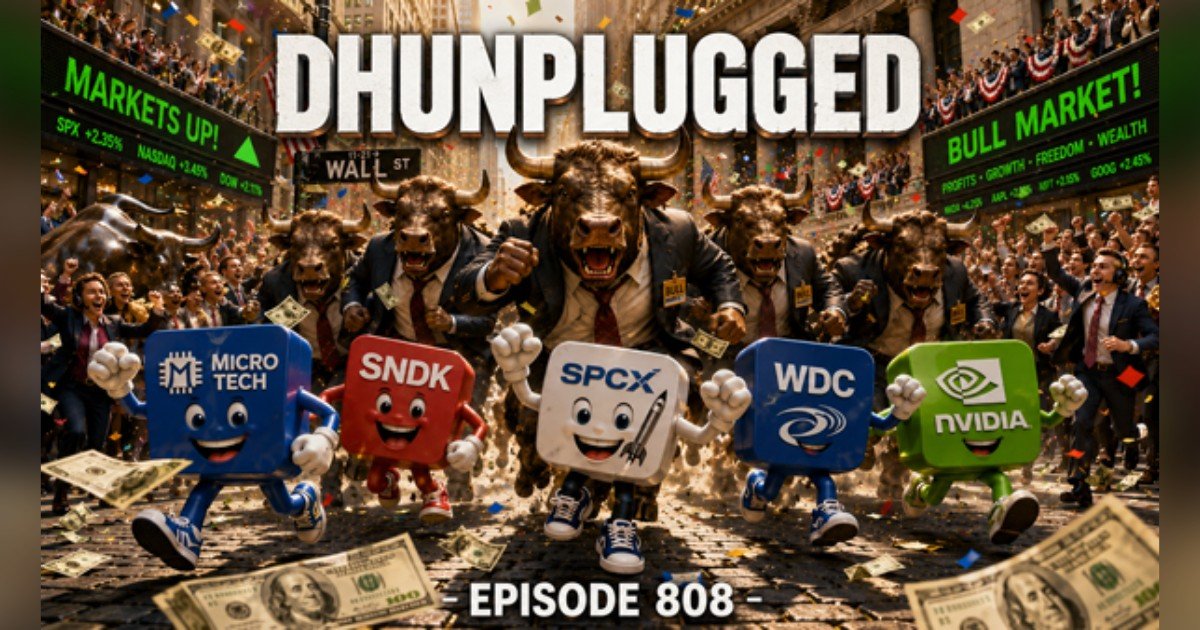
A new antitrust class action has been filed in the United States against Samsung, SK Hynix, and Micron, alleging they coordinated supply cuts that caused conventional DRAM prices to jump approximately 700% over four years. The lawsuit, discussed in the latest episode of DHUnplugged, echoes a 2005 price-fixing case in which the same three companies paid hundreds of millions in penalties. The plaintiffs claim the trio now controls 90% of the DRAM market, enabling them to artificially constrain supply and inflate prices.
The episode, titled 'Bulls in a Bubble Shop,' hosted by John C. Dvorak and Andrew Horowitz, notes that memory stocks have been stellar performers: SanDisk finished the half up 780%, Micron up 300%, Western Digital up 240%, and Seagate up 226%. South Korea's KOSPI surged 125% behind Samsung and SK Hynix. Yet Dvorak questions the sustainability of the AI infrastructure narrative, arguing that compute is shifting back to the desktop via Nvidia Blackwell-powered mini machines, which could leave server farms underutilized and memory prices vulnerable to collapse.
The hosts also dissect the broader market context. The S&P 500 closed the first half of 2026 up roughly 7.5%, the Dow above 52,000, and AI hardware names surging. However, warning signs flash: PCE inflation climbed to 4.1%, and the Bank for International Settlements flagged AI-boom financial-stability risks. Japan's yen weakened to 162 against the dollar, prompting hints of Bank of Japan intervention in what Horowitz calls the 'widowmaker trade.' Meanwhile, SpaceX's newly issued investment-grade bonds are already underwater, and the stock joined the Nasdaq 100.
Horowitz reserved particular scorn for the newly launched Trump Accounts program, which provides $1,000 Treasury-funded seeds for newborns. He called it 'a forced financial literacy experiment wrapped in a political brand name with a socialist starter check to teach capitalism.' The program launched on July 4, the country's 250th anniversary, and was pitched as a lesson in capitalism, ownership, and compounding.
Other topics covered include Chevron's 20-year Project Kilby data-center power deal with Microsoft, Comcast's split of NBCUniversal and Sky, the Interior Department slashing federal drilling bonds 95% to $25,000, Wendy's brief meme-stock spike after CFO Steve Cyrilus arrived from Potbelly, and gold slipping below $4,000 as Bitcoin sank to $58,600. Horowitz also previewed an upcoming Peter Schiff interview on The Disciplined Investor.
The episode underscores that while markets rally, underlying risks—from antitrust actions to inflation to geopolitical tensions—remain elevated. The memory price-fixing case, in particular, could have far-reaching implications for the AI hardware sector and the broader tech industry.