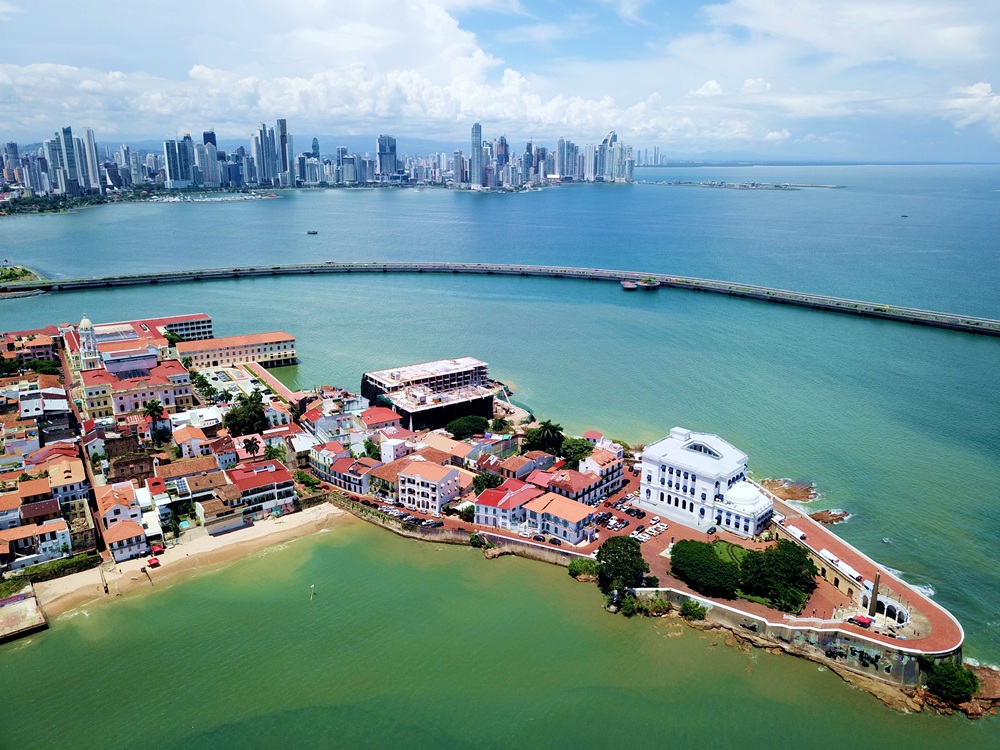
American investors researching Panama often begin with the same approach: they study photographs, analyze the numbers, and still arrive with expectations that do not match reality. The disparity between what they anticipate and what they find on the ground has become a consistent feature of organized investor tours in the country, according to those who lead them.
The surprise is not about price but about context. Investors familiar with Caribbean markets often expect a resort-dependent economy with limited infrastructure and inconsistent amenities outside the tourist corridor. Instead, they find a city with a skyline, an international banking sector, and neighborhoods that range from historic colonial streets to high-rise waterfront districts. The reaction, according to those who have led multiple groups through the country, tends to be consistent regardless of the investor's origin or prior expectations.
Attendees of the second annual Invest Panama Summit in May 2026 came from various U.S. states and Canada, with objectives ranging from pure returns to evaluating residency options to considering Panama as a long-term home base. Despite these differences, their first impressions followed a similar pattern. Ashley Luther, COO and Managing Broker of CHORD Real Estate, noted that even investors who had reviewed photos and videos in advance still found themselves caught off guard. The gap between what images convey and what the city delivers in person has come up consistently across both summits CHORD has hosted. As Luther put it, attendees often describe Panama as more polished and more cosmopolitan than they were prepared for—and that is before they see any of the developments they came to evaluate.
The reasons for this disconnect are partly structural. Panama has not invested heavily in international tourism marketing. The country's economic identity has long been tied to the canal, the banking sector, and its role as a regional business hub rather than as a leisure destination. This means that global perception has not kept pace with the country's actual development.
That economic foundation is one of the factors distinguishing Panama from more tourism-dependent markets in the region. Costa Rica and much of the Caribbean built their international reputations around visitor experiences, while Panama built its around commerce. The result is an economy anchored by the Panama Canal, more than 80 international banks, and over 180 multinational regional headquarters, including companies like Dell and Caterpillar that have established SEM-designated operations in the country. This commercial base creates consistent housing demand that is not tied to seasonal travel patterns or disrupted by the tourism slowdowns that affected Caribbean markets during COVID-19.
For investors evaluating fundamentals, that distinction matters. Rental demand in Panama City is driven largely by professionals—expatriate employees of multinationals, international bankers, and the growing population of remote workers who have chosen Panama as a home base because of its time zone, connectivity, and dollarized economy.
Summit participants who came with purely financial objectives often left with a broader picture of what investing in Panama could look like. The range of available projects—from urban high-rises in established business districts to beachfront developments on Panama's Pacific coast—meant that investors with different risk profiles and lifestyle preferences could all find something worth evaluating seriously. Those who came with residency in mind found that the current qualifying investment threshold of $300,000 in real estate is scheduled to rise to $500,000 in October 2026, adding a timing dimension to decisions they might otherwise have approached as open-ended.
And those who came primarily out of curiosity, without a specific investment objective, tended to leave with something harder to quantify: a concrete sense of whether Panama was a market they wanted to participate in. That clarity, more than any single property or projected return, is what organized investor visits to emerging markets tend to produce. As one CHORD principal noted after the summit concluded: investors came curious, and they left with clarity. The research phase ends when you put boots on the ground.