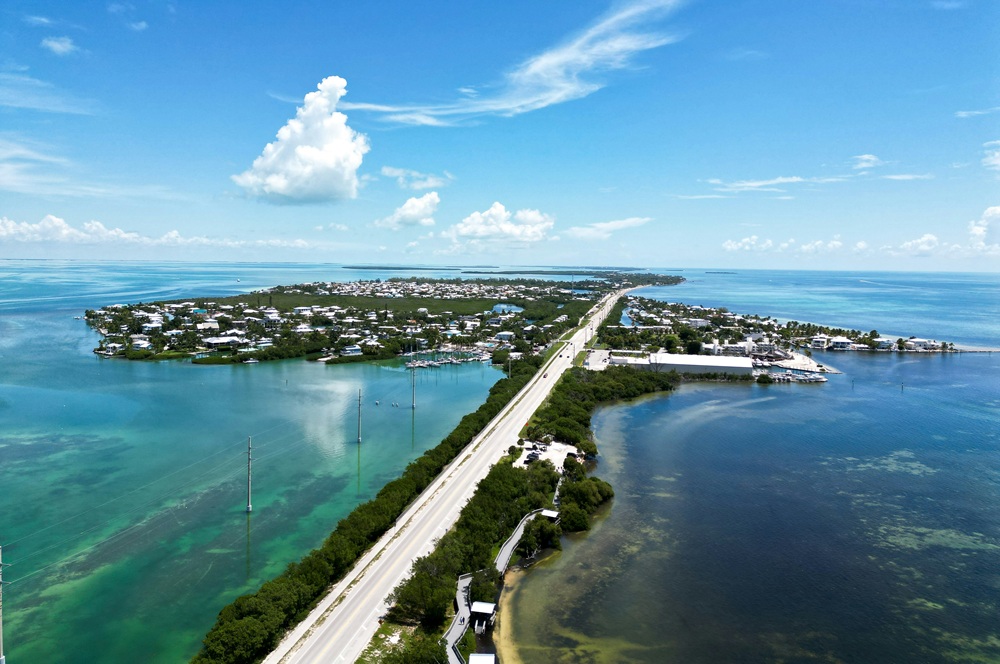
The Florida Keys real estate market is presenting a statistical paradox: aggregate price data suggests a market that almost nobody is actually transacting in. According to Sandy Tuttle, founder of Island Welcome Real Estate, a handful of record-breaking sales at the top of the range have skewed averages and medians upward, while a larger segment of older canal homes has been experiencing price corrections. This divergence means that reported market-wide appreciation figures can mislead both buyers and sellers.
Tuttle, who works primarily in unincorporated Monroe County in the Lower Florida Keys, sees the disconnect from both sides. She explains that the current statistical picture is one of the hardest things for out-of-state buyers to interpret without local context. The market has historically been dominated by modest, uniform housing stock—small two-bedroom, two-bathroom homes around 1,000 square feet, built for fishermen and weekend boaters. However, over the past decade, a new product category has emerged: large vacation estates ranging from 4,000 to 10,000 square feet, built to modern code with wind ratings exceeding 180 miles per hour.
As this new inventory trades, it produces prices with no historical precedent. Tuttle points to single-family sales in the Lower Keys at $12 million and $13 million in the past five years, and Islamorada has seen sales in the $20 million to $22 million range over the past year. “We are constantly crushing ceilings that the Florida Keys have always had,” she said. These transactions represent a genuine and growing segment, but they are statistically disruptive in a market where the dominant average sale price is closer to $1.5 million. A few eight-figure closings materially move both the mean and median for the entire chain, which is then reported as market appreciation.
Below that top tier, conditions are markedly different. Canal homes priced under $1 million are largely 1980s and 1990s construction with smaller layouts and older building codes. Inventory in this band is high, demand is soft, and competition among sellers has led to real price corrections, not appreciation. “You cannot talk to that seller and tell them the market moved five to seven percent last year,” Tuttle said. Days on market in this segment also run substantially longer than the reported average, though for different reasons than at the very top, where the buyer pool is simply smaller.
The practical consequence is that consumer-facing valuation tools, which apply broad price-per-square-foot methodology across the chain, can mislead buyers and sellers in opposite directions. A seller in the sub-million-dollar canal band might read a headline appreciation figure and overprice their home, while a buyer in the same band might assume they are entering a rapidly rising market and act hastily. Tuttle's approach is to strip the analysis down to the price range the client is actually operating in, examining absorption, days on market, and pricing behavior within that band alone. Sellers whose properties fall outside the current high-demand profile are counseled on realistic positioning, and buyers are shown where pricing is aggressive, fair, or inflated relative to comparable inventory in their range.
As older ground-level stock continues to be converted to new construction, the spread between these two segments is likely to widen further before it narrows, making chain-wide averages even less useful as a guide. For anyone considering a move to the Florida Keys, understanding this segmentation is crucial to making informed decisions.